
Understanding Knee Osteoarthritis: How Learning About Your Pain Can Help You Heal
Understanding Knee Osteoarthritis: How Learning About Your Pain Can Help You Heal
Knee Pain Relief Starts with Knowledge: 6 Things to Know About Knee Osteoarthritis
By Dr Adam Walker
At Gold Coast Knee Group, we believe that understanding your knee pain is the first step toward feeling better. If you’ve been diagnosed with knee osteoarthritis (knee OA) or think you may have it, this guide is for you.
When people know more about knee arthritis, they feel more confident, make better choices, and often experience less pain. That’s the power of pain education.
Why Learning About Knee OA Helps
The Neuro-Orthopaedic Institute (NOI) helps people all over the world understand pain better. They’ve created tools to help patients living with osteoarthritis learn about their condition, including the Knee OA Handbook.
At Gold Coast Knee Group, we use these tools and more to help our patients:
Understand what’s really going on inside their knees
Reduce their fear around movement and activity
Avoid unnecessary scans or surgeries
Stay active and manage swelling
When you understand your condition, you feel more in control. And that makes a big difference.
6 Simple Things You Should Know About Knee Osteoarthritis
1. What Is Knee OA?
Knee osteoarthritis is when the parts inside your knee (like cartilage and joint fluid) slowly change over time. This can cause:
Pain
Stiffness
Swelling
But here’s the good news: knee OA can be managed without surgery in many cases. The first step is understanding what’s happening inside your body.
We also recommend videos and guides that explain common myths about knee arthritis.
2. The Three Most Important Things: Knowledge, Movement, and Inflammation
These three areas work together to help you feel better:
Knowledge helps reduce fear and worry
Movement keeps the knee strong and flexible
Reducing inflammation eases pain and stiffness
That’s why we focus on these “Critical 3” in our Kneeletter. They’re your best tools for knee pain relief.
3. Understanding Pain: It’s Not Just About Damage
Pain is complicated. Sometimes, your knee might hurt even if nothing is “broken.”
Here’s why:
Your thoughts, feelings, and stress levels all affect pain
Your brain adds up signals from your body and decides how much to protect you
Pain can change with your environment, your emotions, or your beliefs
The brain is amazing — it can change and heal with practice. That’s called neuroplasticity. Learning to send more “safety messages” to your brain (like calm movement and positive thinking) can reduce pain.
4. Scans Aren’t the Whole Story
Many people are surprised to learn this:
Half of the people with knee OA on an x-ray don’t have pain.
And some people with painful knees don’t show much damage on their scans. This means that pain is influenced by more than just the physical changes in your joint.
Knowing this gives people hope. There are many ways to manage knee pain, and a scan is only one piece of the puzzle.
5. Noisy Knees Are Usually Nothing to Worry About
Clicks, cracks, and pops might sound scary, but they’re usually normal.
Some common causes:
Tendons moving over bones
Air bubbles in the joint fluid
Rough cartilage rubbing in knees with arthritis
Even healthy knees can be noisy! If there’s no pain, you don’t need to worry. If there is pain with the noise, a physio can help figure out what’s going on.
6. Why Your Pain Changes Day to Day
One day your knee might feel fine. The next day, it might ache. Why?
Pain can change depending on:
The weather
Your stress level
How you slept
Your surroundings
What you believe about your knee
Your body and brain work together to create the experience of pain. Knowing this helps you feel more in control.
How We Help Patients Learn (and Heal)
Pain education works best when it’s done the right way. Here’s how we help patients at Gold Coast Knee Group:
Step 1: One topic at a time
We keep it simple, so you don’t feel overwhelmed.
Step 2: Helpful tools to read at home
You get short, easy-to-read guides with clear steps.
Step 3: Use the SALAD method
As you read, write down:
What Surprised you
What Annoyed you
What part you got Lost on
What Applied to your own life
What you Disagreed with
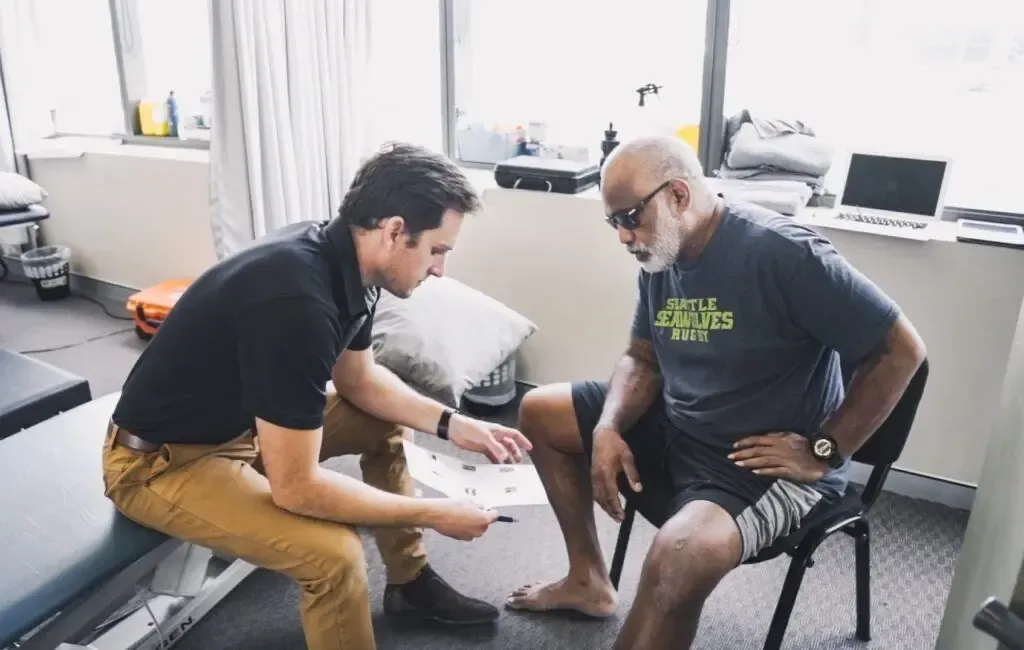
Step 4: Talk it through at your next visit
We go through your notes together to help you learn and grow.
Step 5: Learn with others
Our Healthy Knee Program brings people together to share experiences and support each other.
Final Thoughts: Small Steps Make a Big Difference
Over the past few months, we’ve talked a lot about knee OA and how to manage it. We hope this gives you tools to take your first steps.
Even learning just one new thing can help you move better, feel better, and take charge of your health.
If you’d like help or want to know more about the Healthy Knee Program, please get in touch. We’d love to support you on your journey.
Yours in knee health,
Dr Adam Walker
Gold Coast Knee Group
Frequently Asked Questions (FAQs) About Knee Osteoarthritis
1. What is knee osteoarthritis?
Knee osteoarthritis is a condition where the cartilage in your knee wears down over time, causing pain, swelling, and stiffness.
2. Can I still exercise if I have knee OA?
Yes! Staying active is one of the best things you can do. Gentle movement helps reduce stiffness and pain.
3. Do noisy knees mean I need surgery?
Not at all. Noisy knees are very common and usually not serious. If there’s no pain, there’s likely no problem.
4. Why does my knee hurt more some days than others?
Pain can be affected by stress, sleep, weather, and your mood. That’s why it can change from day to day.
5. Will I definitely need a knee replacement?
Not necessarily. Many people with knee OA manage their condition with movement, knowledge, and support — without surgery.