

Reach Your Athletic Potential with Precision Care
Elevate Performance:
Tailored Sports Physio for Every Athlete!
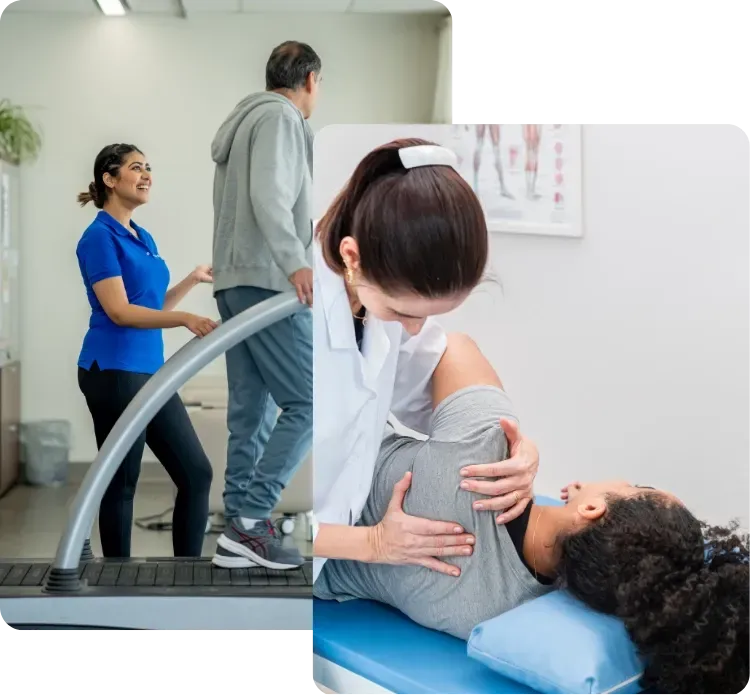
Welcome to our Sports Physiotherapy hub, where we build you up to handle the demands of sport. Whether you're a professional athlete or a weekend warrior, our expert physiotherapists are dedicated to optimising your performance and accelerating your recovery. Our physiotherapists have worked in every facet of professional sport from the Olympics to the AFL and NRL. Discover a personalised approach that understands the unique demands of your sport, ensuring you reach new heights in health and athleticism.
Expert Practitioners
Hardy Sattler
Hardy Sattler is a distinguished Titled APA Sports and Exercise Physiotherapist and Honorary Adjunct Assistant Professor....

Kate O’Connell
Kate O'Connell, a Titled Sports and Exercise Physiotherapist, brings 14 years of experience to her practice. Specializing in musculoskeletal...
Adam Walker
Adam Walker, a passionate physiotherapist and director at Gold Coast Knee Group, focuses on knee pain and injury rehabilitation...
Shannon Gill
Shannon Gill, an enthusiastic physiotherapist, studied at Bond University, completing a Bachelors of Exercise & Sport Science...

Kendal Sands
From Vancouver, Canada, Kendal played collegiate basketball where she experienced an ACL injury giving her insight into the rehabilitation process...
Tim Rigby
Tim is a Physiotherapist, Strength & Conditioning coach who has been in the Sports medicine / rehabilitation field for over 10 years...
Josh Meyer
Josh has 24 years of clinical experience as a Physiotherapist and clinical leader in health & high-performance management. Much of this time was involved successfully owning and directing a large team in private practice....
Patient Resources and Articles
The Recovery Points System
The Recovery Points System: How to Win the 48-Hour Recovery Window
If you’re serious about performance, you already know that training stress is only half the equation. What you do after competition — the recovery window — determines how well you adapt, how soon you can train again, and how consistently you can perform.
At Bond Physiotherapy & Sports Medicine, we see it every week: the athletes who recover with structure and intent bounce back faster, perform more consistently, and stay healthier over the long run.
That’s where the Recovery Points System comes in — a simple, measurable way to track your recovery inputs and make sure you’re doing enough in the crucial 48 hours post-competition.
The 100-Point Recovery Goal
Each recovery activity earns a set number of points.
The goal is simple: Aim to achieve 100 recovery points in the first 48 hours after competition.
This helps you accelerate muscle repair, reduce inflammation, and get your body back to baseline faster, so you can train again sooner, without feeling flat or fatigued.
Recovery Activity Points
Optimal nutrition — The 5 R’s: Refuel, Repair, Rehydrate, Reduce Inflammation, Replenish Micronutrients
20 points
7–9 hours good quality sleep
20 points
Cold OR Contrast Water Therapy (accumulate 10 min cold)
15 points
30 min Sauna
15 points
Compression socks and/or boots (30–60 min in boots)
15 points
30–60 min Massage
10 points
20 min Active pool recovery OR easy cycle or walk in nature
10 points
15–30 min nap or meditation/mindfulness
10 points
Quality time with family and friends
10 points
15–30 min Release/Stretch/Mobility
10 points
Your mission: reach 100 points within 48 hours of competition or a heavy training block.
Why This System Works
Most athletes focus on training load but underestimate recovery load — the structured input your body needs to repair. By quantifying recovery, this system makes the invisible visible.
Each of these recovery actions targets one or more of your body’s key recovery systems:
Nutrition (20 pts): Fuels cellular repair, reduces inflammation, and restores glycogen. Focus on the 5 R’s — Refuel, Repair, Rehydrate, Reduce Inflammation, Replenish Micronutrients. Prioritise protein, carbohydrates, hydration, and anti-inflammatory foods (like berries, leafy greens, and omega-3s). Have 2 good days, get 40 points.
Sleep (20 pts): The foundation of adaptation. During deep sleep, muscle protein synthesis peaks and hormonal recovery processes reset. Have 2 good nights, get 40 points.
Cold or Contrast Therapy (20 pts): Helps control post-match inflammation and muscle soreness while promoting circulation and recovery.
Sauna (15 pts): Encourages relaxation and recovery while improving cardiovascular efficiency and thermoregulation.
Compression (15 pts): Reduces swelling and speeds venous return after long games or travel.
Massage (10 pts): Releases tight tissue, improves blood flow, and lowers stress hormones.
Active Recovery (10 pts): Light movement promotes oxygen delivery and metabolic waste clearance — without adding training load.
Mindfulness or Napping (10 pts): Rebalances the nervous system and restores focus.
Quality Time (10 pts): Emotional recovery matters — social connection reduces cortisol and supports overall wellbeing.
Mobility & Stretching (10 pts): Keeps joints supple and reduces the risk of compensatory strain patterns forming.
How to Apply It
Recovery shouldn’t be left to chance — or squeezed in “if you have time.”
Here’s how to use the system strategically after your next event:
Plan recovery like training. Schedule your nutrition, recovery sessions, and sleep in advance.
Stack points smartly. Combine recovery activities — e.g. post-game cold therapy followed by a good meal and compression boots.
Monitor how you feel. Track soreness, fatigue, and energy. You’ll quickly see how hitting your 100 points transforms your bounce-back.
Be consistent. The 48-hour window sets up the entire training week. Don’t skip it.
The Bottom Line
The Recovery Points System helps you recover with purpose — not guesswork.
Hit your 100 points in the first 48 hours, and you’ll feel the difference: less soreness, better sleep, more energy, and sharper training sessions that follow.
Have a question?
Speak to one of our staff
Contact Details
Bond Institute of Health and Sport Robina, (Next to Cbus Super Stadium) Ground Level, 2 Promethean Way, Gold Coast, QLD, 4226
Follow Us


Copyright 2026 Gold Coast Knee Group