



Growing Strong, Moving Well

Youthful Care at Bond Physio:
Supporting Growth and Thriving Kids!
Welcome to a dedicated space for the young ones at Bond Physiotherapy. Our Paediatric and Adolescents care is crafted to support the growth and development of the next generation. From developmental concerns to sports injuries, our expert team provides compassionate care to ensure your child moves, grows, and thrives at their very best.
Expert Practitioners

Jedda Kennedy
Jedda Kennedy is a dedicated physiotherapist with a Masters in Physiotherapy and Exercise Science.

Shannon Gill
Shannon Gill, an enthusiastic physiotherapist, studied at Bond University...
Paediatric & Adolescent Physiotherapy - FAQ's
What can paediatric physiotherapy help with?
Paediatric physiotherapy can assist children and adolescents with developmental, movement and physical concerns, as well as injuries related to sport and physical activity.
Is physiotherapy suitable for young athletes?
How do you make physiotherapy engaging for children?
Treatment is adapted to the child's age, understanding and abilities. We aim to make rehabilitation achievable and engaging while giving parents and young people clear information about their progress and how they can support recovery.
Yes. Young athletes can experience sports injuries while also having specific considerations related to growth and development. Rehabilitation can be adapted to their age, physical development, sport and individual goals.
Patient Resources and Articles
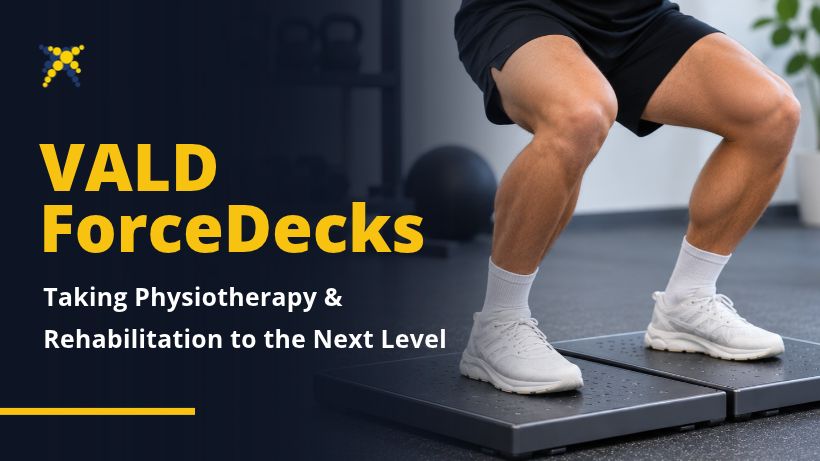
VALD ForceDecks: Taking Physiotherapy, Rehabilitation and Return-to-Sport Testing to the Next Level
Objective testing. Smarter rehabilitation. More confidence in your recovery.
Recovering from an injury is about more than simply getting rid of pain. Whether you've injured your knee, ankle, hip or shoulder, returning to your previous level of strength, function and sporting performance requires a structured rehabilitation approach.
At Pindara Physiotherapy, we use VALD ForceDecks technology to bring objective strength, movement and performance testing into our physiotherapy assessments. This allows us to look beyond what we can see during a standard physical examination and gain a better understanding of how your body produces and distributes force.
But what does this mean for your recovery, and how can it help you return to sport?
What are VALD ForceDecks?
VALD ForceDecks are specialised force plates that measure the forces your body produces when performing different movements and exercises.
By standing, squatting, jumping or performing specific strength tests on the plates, we can collect objective information about your physical performance.
Unlike traditional assessments that may rely heavily on visual observation or manual strength testing, ForceDecks provide measurable data that can help identify differences between your left and right sides.
Some of the information we can assess includes:
Strength: How much force each leg or limb can produce.
Power: How effectively you generate force during explosive movements.
Limb asymmetry: Differences in force production between your left and right sides.
Jump performance: Jump height, take-off force and landing mechanics.
Balance and stability: How effectively you control your body during standing and single-leg tasks.
Landing performance: How you absorb and distribute force when landing.
This information helps your physiotherapist build a clearer picture of your current physical capabilities.
How do we use ForceDecks at Pindara Physiotherapy?
One of the biggest advantages of ForceDecks is that they can be incorporated into different stages of your physiotherapy journey.
Rather than relying exclusively on pain levels or how an injury feels, we can use objective measurements to help guide rehabilitation and monitor changes over time.
1. Initial assessment following injury
Following a musculoskeletal injury, it is important to understand what physical limitations may be contributing to your symptoms or affecting your function.
ForceDecks can help assess differences in strength, force production and movement between limbs.
For example, following a knee injury, we may identify that one leg is producing considerably less force than the other. This can help direct our rehabilitation towards addressing the specific deficits identified.
2. Monitoring rehabilitation progress
Rehabilitation is not always a straightforward process. Symptoms can improve before strength, power and physical capacity have fully recovered.
By repeating appropriate ForceDecks assessments throughout your rehabilitation, we can monitor changes in performance and determine whether your strength and movement capacity are improving.
This provides another way to measure progress beyond pain scores and subjective feedback.
3. Return-to-sport assessments
Returning to sport after an injury requires more than being able to walk, jog or perform everyday activities without pain.
Athletes need to regain the strength, power and ability to tolerate the physical demands of their sport.
ForceDecks can help assess important physical qualities such as:
Single-leg strength and force production.
Jumping and landing performance.
Explosive power and reactive strength.
Differences between the injured and uninjured limbs.
Changes in performance throughout rehabilitation.
These measurements can help inform return-to-sport decisions alongside clinical examination, functional testing, symptoms and the specific demands of your sport.
What injuries can benefit from ForceDecks testing
ForceDecks can be particularly useful when assessing and monitoring rehabilitation following lower-limb injuries, although their applications extend beyond the lower body.
Some examples include:
ACL reconstruction and knee injuries
Following ACL reconstruction, restoring quadriceps and lower-limb strength is an important component of rehabilitation.
ForceDecks can help assess differences in force production between legs, alongside jumping, landing and single-leg performance.
Ankle sprains and lower-limb injuries
Following an ankle sprain, patients may regain their walking ability but continue to demonstrate deficits in balance, strength and explosive performance.
Single-leg balance, hopping and jumping assessments can help identify these limitations and guide progression towards running and sport-specific activities.
Hamstring and muscle injuries
Returning to sprinting and explosive activities requires adequate force production and the ability to tolerate higher physical demands.
ForceDecks can provide useful information about jumping performance and lower-limb force production as part of a broader rehabilitation assessment.
Shoulder injuries
ForceDecks can also be used for upper-limb strength assessments, including isometric shoulder testing.
This can be particularly useful when monitoring strength following shoulder injuries, surgery or periods of reduced activity.
Why is objective testing important?
One of the challenges in physiotherapy is determining whether someone has genuinely regained their physical capacity following an injury.
For example, someone may report that their knee feels significantly better and they can complete their usual gym routine. However, they may still have meaningful differences in strength or jumping performance between their legs.
Objective testing helps identify these differences.
Research published in the Journal of Science and Medicine in Sport in 2024 examined the validity and reliability of VALD ForceDecks across 12 different strength, balance and movement tests.
The researchers found that 79% of the assessed metrics demonstrated good or excellent validity when compared with laboratory force plates. They also found that 79% demonstrated good or excellent test–retest reliability.
This supports the use of ForceDecks as a valuable tool for measuring physical performance, provided appropriate testing procedures are followed.
Importantly, force plate results are not a standalone measure of recovery. They should be interpreted alongside your symptoms, clinical examination, functional ability and individual rehabilitation goals.
Is ForceDecks testing right for you?
Whether you are recovering from surgery, managing a persistent musculoskeletal injury or preparing to return to competitive sport, understanding your physical capabilities can help make rehabilitation more targeted.
At Pindara Physiotherapy, we combine hands-on clinical assessment, individualised exercise rehabilitation and objective testing to help you work towards your goals.
You don't have to be an elite athlete to benefit from performance testing. Anyone looking to improve their strength, movement and confidence following an injury may benefit from a more objective understanding of their physical capabilities.
Want to know how your body is performing?
Book an appointment with Pindara Physiotherapy to discuss how VALD ForceDecks testing can be incorporated into your rehabilitation, strength assessment or return-to-sport program.
Measure your progress. Build your strength. Return with confidence.
Reference
Collings, T.J., Lopes Lima, Y., Dutaillis, B. & Bourne, M.N. (2024). Concurrent validity and test–retest reliability of VALD ForceDecks' strength, balance, and movement assessment tests. Journal of Science and Medicine in Sport, 27, 572–580. https://doi.org/10.1016/j.jsams.2024.04.014

Have a question?
Speak to one of our staff
Contact Details
Bond Institute of Health and Sport Robina, (Next to Cbus Super Stadium) Ground Level, 2 Promethean Way, Gold Coast, QLD, 4226
Follow Us



Copyright 2026 Gold Coast Knee Group